Choosing the right pixel pitch for church displays is crucial. It affects clarity and audience engagement. Many wonder, "How to choose the right pixel pitch for my church?" This decision can shape worship experiences.
Pixel pitch refers to the distance between pixels in a display. A smaller pixel pitch results in higher resolution. It is essential for capturing the attention of congregants. But, it's not a one-size-fits-all solution. Consider factors such as viewing distance and the size of the space. The ideal pixel pitch varies based on specific needs and preferences.
It’s easy to overlook how pixel pitch impacts visibility. A pitch too large can lead to a blurry image. Conversely, a pitch too small may waste resources. Balancing quality and cost is vital. Therefore, understanding these elements will guide your decision-making process. Choose wisely for a lively church environment that meets everyone’s needs.
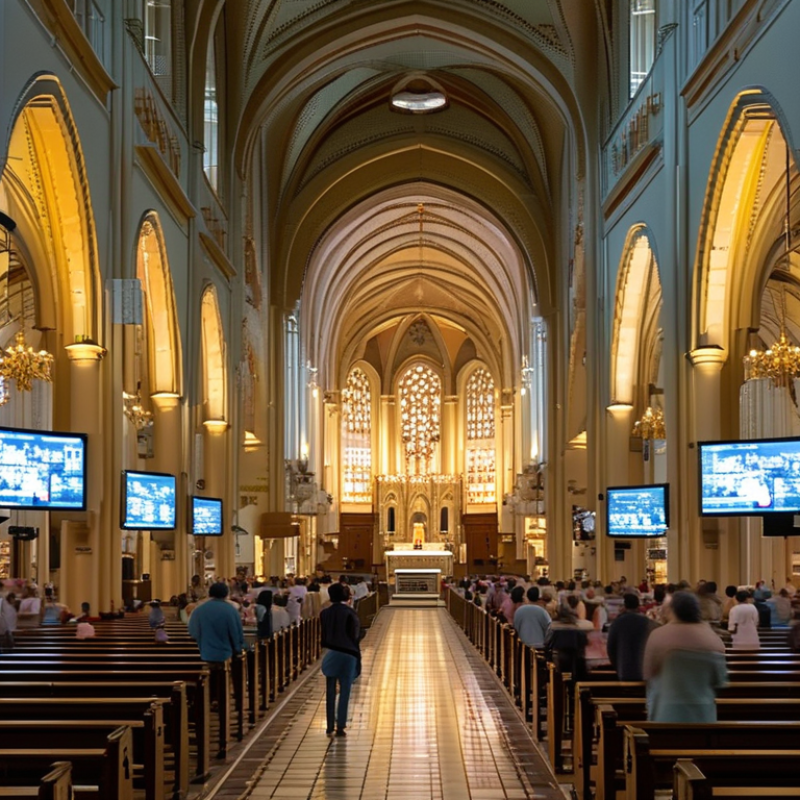
Choosing the right pixel pitch for your church's display system is crucial. Pixel pitch refers to the distance between pixels on a screen. It affects clarity and viewing distance. A smaller pixel pitch means higher resolution and detail. This is essential for delivering clear messages to your congregation, especially in large spaces.
When selecting pixel pitch, consider your venue's size. If your church is large, a lower resolution (higher pixel pitch) may suffice. However, for smaller spaces, a finer pixel pitch enhances the experience. It's vital to also think about viewing angles. Not all congregants sit in prime spots. Poor visibility can affect engagement.
Reflection is important in this decision-making process. Gather feedback from members about their viewing experiences. You may discover that resolution needs vary greatly among your audience. Factors like lighting can change how content appears. Take time to assess these needs carefully to make an informed choice.
When choosing pixel pitch for LED displays in your church, several factors come into play. The pixel pitch directly affects resolution and clarity. A smaller pixel pitch provides greater detail, ideal for close viewing. Large gatherings often see attendees sitting far from the screen, so consider how far your audience will be. A pitch that feels suitable for a small venue may look pixelated in a larger space.
Another important factor is the environment. Indoor venues usually allow for tighter pixel pitches, as viewers are often closer. However, outdoors, factors like sunlight and distance can diminish visibility. A balance must be struck between clarity and practicality. Lighting conditions impact screen performance. Assess how your chosen display will function in varying light levels, particularly in bright daylight.
Budget constraints also play a crucial role. Higher resolutions cost more, both in purchase and installation. Careful planning can help avoid overspending. It is essential to reflect on your church’s needs over time. Will your audience grow? Will the display be used for other events? These considerations will ultimately guide your decision on pixel pitch. Taking the time to analyze these elements ensures a better experience for your congregation.
| Factor | Description | Recommended Pixel Pitch (mm) |
|---|---|---|
| Viewing Distance | The distance from which the display will be viewed. Greater distances allow for larger pixel pitches. | < 3m: 1.5mm 3m-6m: 2.5mm 6m+: 4mm |
| Content Type | The type of content displayed, such as videos, images, or text, which influences pixel density requirements. | Video: 2mm Images: 2.5mm Text: 3mm |
| Screen Size | The physical dimensions of the display, which can determine the appropriate pixel pitch. | Small (up to 10'): 1.5mm Medium (10'-20'): 2mm Large (20'+): 2.5mm+ |
| Budget | The financial resources available for purchasing an LED display, affecting the choice of pixel pitch. | High-end: < 2mm Mid-range: 2mm-4mm Budget: 4mm+ |
| Installation Environment | Indoor vs Outdoor settings, which may require different pixel pitches due to brightness and visibility. | Indoor: 2mm Outdoor: 3mm-5mm |
When choosing pixel pitch for your church, consider
optimal viewing distances. The pixel pitch refers to the distance between pixels in a display. A tighter pixel pitch
provides clearer images closer to the screen. If your congregation sits farther away, a larger pixel pitch may suffice.
Understanding your space is crucial.
For large auditoriums, a pixel pitch of 10mm or more could be
appropriate. This allows for adequate clarity even from a distance. However, if your seating is closer, opt for a
smaller pitch. A pitch of 4mm can enhance visual quality. Test
different pixel pitches to see how they fit your space. Sometimes, the specifications seem perfect on paper but fail
in real-world scenarios.
It's also important to consider your specific needs. Do you plan to show live feeds, videos, or static images? Each
content type requires different levels of detail. Balancing aesthetics and practicality can be challenging. A pixel
pitch choice should not only cater to your current needs, but also anticipate future requirements. This might lead to
some trial and error, ultimately guiding your decision.
When selecting pixel pitch for your church, budget plays a pivotal role. The pixel pitch determines the resolution and quality of your display. Higher quality often comes with a steeper price tag. You may wonder if the investment is worth it. Low pixel pitch might save money initially, but it can lead to poor visibility in larger spaces. This poses a risk for connecting with your congregation.
Balancing quality and cost requires careful assessment. Consider your church's size and viewing distance. A smaller pixel pitch enhances detail but may exceed budget constraints. Explore alternative funding options like donations or community sponsorships. It’s vital to weigh long-term benefits against immediate costs.
Quality displays can enhance worship and outreach. A well-informed decision reflects your commitment to creating a vibrant community space. Adjusting your expectations may lead to more realistic choices.
When selecting the right pixel pitch for your church's display, consider future technology trends.
Pixel pitch directly affects image clarity and viewer experience. Reports indicate that more than 70% of viewers cannot perceive resolution differences beyond a certain point.
This suggests that churches should aim for a balance between cost and visual quality.
Choosing a smaller pixel pitch enhances detail but incurs higher costs. However, for large spaces, a pitch of 3mm to 5mm can suffice.
This range allows for clearer images while optimizing the budget. It’s also essential to think about future needs. Digital displays can last up to a decade,
and if pixel pitch is too high, you may miss the chance to adapt.
Incorporating flexible systems with modular designs can be a smart move. This provides opportunities to upgrade without replacing the entire setup.
Data shows that organizations that invest in adaptable technology retain better engagement.
However, it's vital to assess your congregation's needs and budget constraints. Balancing innovation with practicality ensures that your church stays relevant in
a quickly evolving digital landscape.
: Pixel pitch is the distance between pixels on a screen. It impacts clarity and viewing distance.
It affects how clearly messages are conveyed to the congregation, especially in large venues.
Larger venues may require a higher pixel pitch. Smaller spaces benefit from a finer pixel pitch for clarity.
Many congregants sit in less-than-optimal spots. Poor visibility can hinder engagement during services.
Listening to members about their experiences can reveal varied needs regarding resolution and visibility.
Closer seating typically requires a finer pixel pitch. Larger distances can accommodate a higher pixel pitch.
Live feeds and videos may need higher detail levels, influencing your pixel pitch choice.
Yes, choices that seem perfect on paper may not perform well in real scenarios. Testing is vital.
Experimenting with different pixel pitches can clarify what works best for your specific environment.
Yes, anticipating future requirements can guide your choice and reduce the need for replacements later.
In exploring how to choose the right pixel pitch for my church, understanding pixel pitch and its significance is crucial. Pixel pitch refers to the distance between the center of one pixel and the center of the adjacent pixel, which directly influences image clarity and detail. When selecting the appropriate pixel pitch for LED displays, factors such as viewing distance, audience engagement, and specific application needs must be thoroughly considered.
Additionally, optimal viewing distances play a significant role in determining pixel pitch; closer viewing distances often require finer pixel pitches for clarity. Budget considerations also come into play, balancing the desire for high-quality displays with financial constraints. Lastly, future-proofing technology is essential, ensuring that the chosen pixel pitch can accommodate potential advancements and expansions in your church's audio-visual needs. By assessing these factors, churches can make informed decisions to enhance their visual outreach effectively.

Sync LED