In the world of lighting technology, innovation is key. Many are asking, "Why choose COB LED over traditional SMD?" This question reflects a growing interest in efficient lighting solutions. COB (Chip-on-Board) LED technology offers several advantages that make it a compelling choice.
COB LEDs provide brighter light with improved uniformity. They create fewer hot spots and shadows compared to SMD (Surface Mounted Device) LEDs. This results in better visibility and aesthetics, crucial in both residential and commercial spaces. Furthermore, COB LEDs tend to have a longer lifespan, reducing the frequency of replacements and maintenance.
However, it's essential to consider that the initial cost of COB may be higher than SMD. While they save money in the long run, upfront investment is a barrier for some. Balancing quality and budget is vital for consumers. Ultimately, choosing the right lighting solution requires careful evaluation of these factors.
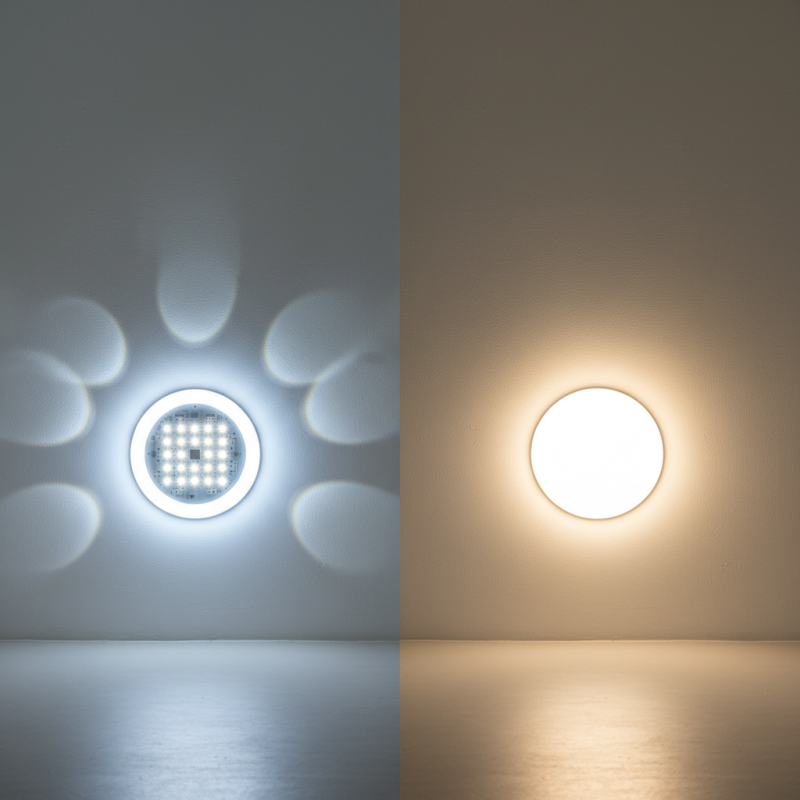
Introduction to COB LED and SMD Technology Differences
COB (Chip on Board) LED technology differs significantly from traditional SMD (Surface-Mounted Device) lighting. COB LEDs integrate multiple chips into a single module. This results in denser light output and improved efficiency. SMD, on the other hand, houses each LED chip separately, leading to a scattered light effect. For applications requiring even lighting, COB is often preferred.
When considering a lighting upgrade, think about your specific needs. If you desire intense brightness in a small area, COB LEDs provide that punch. SMD might still shine in scenarios needing flexibility and design versatility. Choose wisely based on your space and lighting goals.
Lighting professionals often recommend COB for environments that require warmth and ambiance. However, it's important to note that COB may produce more heat than SMD. Assess your cooling requirements. In some cases, the energy savings of COB might be offset by the cost of additional cooling systems. Always factor in total expenses when making a decision. Consider testing both options in your environment to see which works best.
Comparison of COB LED and Traditional SMD Technology
| Feature |
COB LED |
Traditional SMD |
| Light Output |
Higher lumens per watt |
Lower lumens per watt |
| Thermal Efficiency |
Better heat dissipation |
Less efficient heating |
| Size |
Compact design |
Larger size |
| Color Rendering |
Superior color accuracy |
Variable color rendering |
| Lifespan |
Longer lifespan |
Shorter lifespan |
| Application |
Ideal for high-brightness applications |
Suitable for general lighting |
Key Advantages of COB LED in Lighting Applications
COB LED technology offers significant advantages over traditional SMD lighting, making it an appealing choice for various applications. One crucial benefit is the cohesive source of light. With COB LEDs, multiple diodes are packed closely together. This arrangement allows for a more uniform light distribution, reducing shadows and enhancing overall illumination. Users often report brighter and more vibrant spaces when switching to COB.
Another key advantage lies in energy efficiency. COB LEDs consume less power than their SMD counterparts while providing the same or even greater light output. This not only leads to reduced electricity bills but also decreases heat generation. The lower heat output can extend the lifespan of the lighting fixture, which is a tangible advantage for users seeking long-term solutions. Sometimes, however, achieving optimal efficiency requires careful planning regarding placement and heat management, as poor implementation can lead to diminished performance.
Color rendering is another area where COB LEDs shine. They often provide better color accuracy, allowing for more vivid and true-to-life colors. For applications such as retail or art galleries, this can significantly enhance the visual experience. Still, achieving perfect color quality may involve selecting the proper COB product. Users need to assess various options to find the ideal fit for specific environments. Overall, while COB LEDs show promise, careful consideration is essential to fully realize their potential benefits.
Energy Efficiency Comparison: COB LED vs. Traditional SMD
When comparing energy efficiency, COB LEDs show significant advantages over traditional SMD lighting. COB, or Chip on Board, technology packs multiple LED chips closely together. This design increases light output without demanding more energy. Consequently, you get brighter lighting while consuming less power, a trait that aligns well with modern energy standards.
Traditional SMD lights often rely on separate components. This leads to inefficiencies, especially in larger installations. In these cases, they produce more heat, wasting energy that could otherwise go to illumination. Users frequently note these performance gaps. They find that COB LEDs not only consume less energy but also provide a more uniform light distribution. This results in fewer dark spots and a more pleasant overall illumination experience.
However, transitioning from SMD to COB isn't without its challenges. Some users may notice higher upfront costs when purchasing COB fixtures. While energy savings can be significant over time, initial investments require careful consideration. Adopting new technology comes with a learning curve, which can be intimidating. But for many, the superior efficiency and long-term benefits outweigh these initial hurdles.
Longevity and Durability: A Look at COB LED Benefits
COB LED technology offers significant advantages over traditional SMD lighting solutions. One of the key benefits is its longevity. COB LEDs have a longer lifespan, often lasting up to 50,000 hours compared to the 20,000 hours typical of SMDs. This extended duration means fewer replacements, reducing maintenance costs and waste.
Durability is another critical factor. COB LEDs are generally more robust, designed to withstand vibrations and impacts better than SMDs. This durability translates to a lower risk of damage in various environments, from commercial applications to home use. When choosing lights, consider where they will be installed. For high-traffic areas, the sturdy design of COB LEDs can be particularly beneficial.
Tips: When installing COB LEDs, ensure they have adequate heat dissipation. Overheating can shorten their lifespan. Additionally, use suitable drivers to maintain consistent performance. If you’re transitioning from SMD to COB LEDs, keep in mind that the initial cost might be higher. However, the long-term savings can outweigh this upfront investment. Always evaluate your lighting needs to make informed choices.
Applications and Use Cases: When to Choose COB LED Over SMD
When selecting lighting for specialized applications, choosing the right LED type is crucial.
COB LEDs excel in situations requiring uniform illumination and minimal shadows.
Their dense chip arrangement provides a seamless, bright light source ideal for high-quality photography,
studio lighting, and display cases.
These applications demand consistent brightness across large areas, which COBs deliver with ease.
On the other hand, SMD LEDs are versatile and suitable for decorative lighting or smaller spaces.
However, in scenarios where light consistency and intensity matter most, SMDs often fall short.
Some industries still debate whether COB’s higher heat output and complexity justify their benefits, especially when cost becomes a concern.
For applications like use in medical equipment, where precise, uniform lighting impacts diagnostics,
COB LEDs are often preferred. Nonetheless, designers must consider possible thermal management challenges and ensure reliable heat dissipation.
Choosing between COB and SMD depends heavily on specific project needs and precision requirements, which isn’t always straightforward.
FAQS
: COB integrates multiple chips into a single module for denser light. SMD houses chips separately, causing scattered light.
COB LEDs are best for environments needing uniform lighting and warmth, such as photography and display cases.
Yes, COB LEDs consume less power and generate less heat, which can lower electricity bills and extend fixture lifespan.
COB LEDs may produce more heat and could require additional cooling systems, which can add to costs.
Yes, they typically provide better color accuracy, enhancing visual experiences in retail or art settings.
SMDs are versatile, suitable for decorative uses and smaller spaces where light intensity isn't the main concern.
Assess your space, cooling needs, and the potential need for careful placement and heat management.
Yes, improper implementation can lead to diminished performance, so careful planning is essential for achieving optimal results.
If uniformity and intensity are critical, COB is often preferred, but cost and thermal management challenges need consideration.
No, choosing the right LED type depends heavily on your specific project requirements and precision needs, which can be complex.
Conclusion
When considering lighting solutions, a common question arises: "Why choose COB LED over traditional SMD?" This article delves into the fundamental differences between Chip-on-Board (COB) LED technology and Surface-Mount Device (SMD) technology, highlighting the superior advantages of COB LEDs for various lighting applications. Key benefits of COB LEDs include enhanced energy efficiency, as they produce more light while consuming less power, and superior longevity, which translates to lower maintenance costs over time.
Moreover, COB LED lighting offers improved durability, making it an ideal choice for a wide range of applications—from residential to commercial settings. The article outlines specific scenarios where opting for COB LEDs is advantageous over SMDs, such as in accent lighting and high-illumination environments. Overall, the choice of COB LED can lead to more effective and sustainable lighting solutions.

 Sync LED