Fine pitch LED displays have gained significant popularity in various sectors, including advertising, entertainment, and retail. However, a common question arises: "Why are fine pitch LED displays so expensive?" The reasons are multifaceted and merit in-depth exploration.
To begin with, the manufacturing process for fine pitch LEDs is complex. High precision is required to produce smaller pixel pitches without compromising image quality. This intricate method demands advanced technology, skilled labor, and stringent quality control, all of which contribute to higher costs. Additionally, the materials used in these displays, such as high-quality LEDs and advanced circuit boards, are not only costly but also critical to achieving superior performance.
Furthermore, market demand plays a pivotal role in determining prices. As more businesses and event organizers seek state-of-the-art displays, the competition increases, leading to elevated prices. Couple that with the relatively limited supply of high-end manufacturers, and it creates a challenging economic environment for buyers. While fine pitch LED displays offer remarkable visual experiences, these factors necessitate a thoughtful consideration of their investment value.
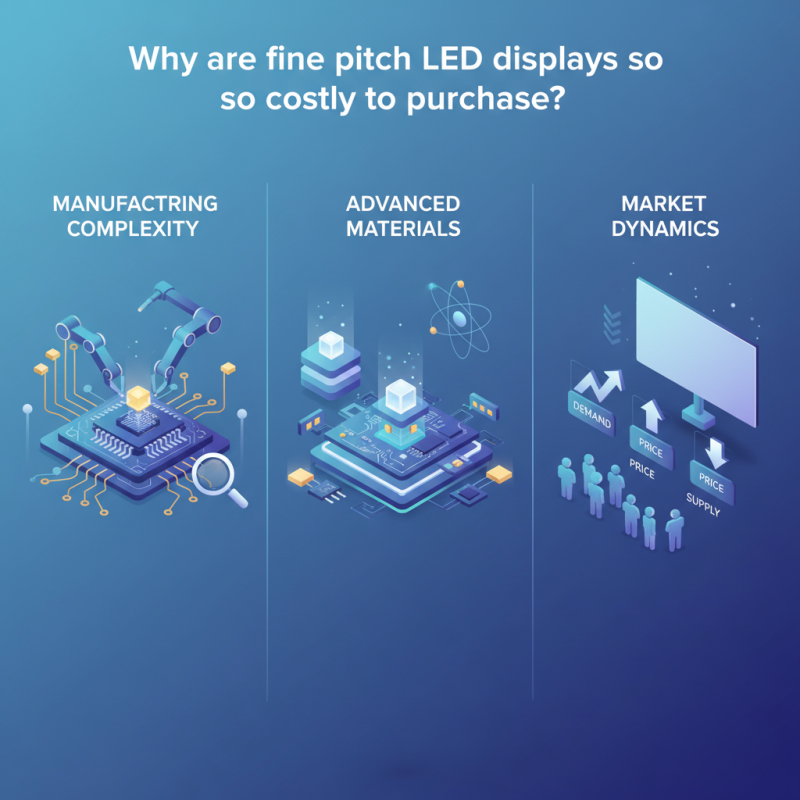
Factors Influencing the Cost of Fine Pitch LED Displays
Fine pitch LED displays have gained popularity in various applications. However, their high cost is a topic of discussion. Several factors influence this pricing. The manufacturing process stands out. Producing fine pitch displays requires advanced technology and precision. For instance, the market data shows that the production yields can drop significantly if the process is not optimized. This increases costs.
Material quality is another critical aspect. High-grade components contribute to superior performance. According to industry reports, the investment in premium materials can account for 30% of the total unit cost. Moreover, these displays often feature intricate designs. This complexity demands skilled labor and advanced equipment, leading to further expenses.
Additionally, demand and supply dynamics play a role. The market for fine pitch LED displays continues to grow rapidly. A report from a leading market research firm notes a CAGR of 25% in this sector. Yet, the supply chain for these specialized components remains tight. Fluctuating demand can drive up prices even further, making these displays more costly than anticipated. Industry experts suggest that as technology advances, we may see costs stabilize. Nonetheless, for now, understanding these factors is essential for buyers.
Why are fine pitch LED displays so costly to purchase? - Factors Influencing the Cost of Fine Pitch LED Displays
| Factor |
Description |
Impact on Cost |
| Pixel Pitch |
The distance between pixels, affecting resolution and clarity. |
Higher costs for smaller pixel pitches due to sophisticated manufacturing. |
| Technology |
Different LED technologies (SMD, COB) impact performance and price. |
Advanced technologies tend to increase costs. |
| Manufacturing Process |
The complexity of production methods for fine pitch displays. |
More intricate processes elevate the overall cost. |
| Material Quality |
Quality of LED chips and other components used in display. |
High-quality materials lead to increased pricing. |
| Market Demand |
The demand for high-resolution displays drives pricing. |
Higher demand can justify premium costs. |
| R&D Costs |
Investment in research and development for improved technology. |
R&D expenses can be reflected in the final price. |
Material Quality and Manufacturing Precision in LED Displays
Fine pitch LED displays have emerged as one of the most effective solutions for high-resolution visual needs. However, their pricing remains a challenge for many businesses. When analyzing the costs, material quality and manufacturing precision play crucial roles. High-grade materials such as premium phosphor coatings and advanced semiconductors are required to achieve optimal performance. According to industry reports, around 70% of the total costs can be attributed to these superior materials.
Manufacturing processes for fine pitch LEDs are complex. They demand advanced technologies and strict quality control measures. Companies often employ robotic assembly lines that enhance precision and reduce human error. However, these processes increase production costs. For example, achieving a pixel pitch of 1.2mm may require manufacturing tolerances within 50 microns. This level of precision is not just challenging; it also elevates costs significantly.
Despite these intricacies, the market has seen a surge in demand. Reports suggest that the fine pitch LED market could grow by over 25% annually. This growth reflects a combination of rising quality standards and technological advancements. Yet, the relentless push for lower prices creates tension. While consumers desire affordability, the industry needs to balance performance with cost. This ongoing dilemma underscores the need for continuous reflection on manufacturing practices and material choices.
Technological Advancements and Their Impact on Pricing
Fine pitch LED displays have become increasingly popular in various applications. However, their costs remain high. A crucial reason lies in the technological advancements driving their design and functionality. The resolution of these displays is staggering. For instance, recent industry reports indicate that the pixel density can exceed 1000 pixels per inch. This high precision requires sophisticated manufacturing processes and materials, significantly inflating production costs.
Moreover, innovations like improved color accuracy and brightness have pushed expenses further. Quality control in the production of fine pitch displays is essential. According to a report by a leading market research firm, about 30% of manufacturing costs relate to quality assurance. Companies face challenges in maintaining standards, which directly influences pricing.
Tips: Consider the long-term benefits of investing in these displays. Sometimes a higher initial cost translates to better performance and durability.
Additionally, the development cycle for these technologies is also lengthy. Research and development investments take years to yield new products. This delay often results in higher prices. Even minor advancements demand substantial financial resources. It’s a balance between innovation and cost management.
Tips: Budget effectively for these displays. Being informed about pricing trends can help in making careful purchase decisions.
Market Demand and Competition for Fine Pitch LED Displays
The demand for fine pitch LED displays has surged in recent years. Businesses and event organizers seek high-resolution displays for their superior image quality. This increased interest also attracts competition among manufacturers. Companies want to capitalize on the growing market. Yet, this competition does not necessarily lead to lower prices.
Manufacturers face challenges when producing fine pitch displays. The technology involves intricate design and precise engineering. Sourcing high-quality materials adds to production costs. Limited suppliers contribute to higher prices. Additionally, the demand often outstrips supply, which keeps prices elevated. Companies may struggle to maintain inventory to meet consumer needs.
The fine pitch LED display market shows potential for growth. However, the balance between demand and supply is fragile. Buyers are willing to pay more for quality, but they also seek affordability. The pricing strategy must reflect both consumer expectations and production realities. Failure to align these can lead to lost opportunities for both manufacturers and buyers.
Limited Production Scale and Its Effects on Cost Efficiency
The production scale of fine pitch LED displays plays a crucial role in their pricing. Limited production often leads to higher costs per unit. Manufacturers face significant initial investments. They need specialized equipment and skilled labor for precision assembly. This equipment is expensive and not easily repurposed for larger manufacturing runs.
With a smaller market demand, companies are forced to operate at lower volumes. This low volume does not allow for the same economies of scale enjoyed by mainstream display technologies. While larger production runs can reduce costs significantly, fine pitch LEDs remain niche. The result is a pricing model that reflects these unique challenges and complexities.
Each display is meticulously crafted, leading to variable costs. Quality control processes are stringent, ensuring a high-end product. However, this commitment to quality can also increase the final price. As technologies advance, the industry may see more cost-effective solutions. Yet, for now, the costs reflect both the intricacies of the production process and the limited buyer base.
FAQS
: High-grade materials and advanced manufacturing processes account for about 70% of the costs.
It requires precise engineering and strict quality control, increasing production costs significantly.
Achieving fine pixel pitch requires tolerances within 50 microns, driving prices higher than expected.
Higher initial costs often lead to better performance, durability, and long-term savings.
Increasing demand often exceeds supply, which keeps prices elevated despite competition among manufacturers.
Quality assurance contributes to about 30% of manufacturing expenses, affecting overall pricing.
While innovations boost prices, they lead to better resolution and color accuracy, which many consumers value.
Limited suppliers, intricate designs, and maintaining high standards all contribute to ongoing price tensions.
Effective budgeting and staying informed about pricing trends can help in making careful purchase choices.
Misalignment can lead to lost opportunities for both manufacturers and buyers, affecting market growth.
Conclusion
Fine pitch LED displays have gained popularity for their remarkable image quality and high resolution, but the question arises, "Why are fine pitch LED displays so expensive?" Several factors contribute to their high costs. Firstly, the quality of materials used and the precision required in their manufacturing processes significantly influence pricing. Advanced technology plays a vital role as well, with continuous innovations driving costs upward due to research and development expenses.
Additionally, market dynamics, such as demand for high-quality displays and competition among manufacturers, play a critical role in determining prices. With a relatively limited production scale, the economies of scale are not fully realized, further escalating costs. Thus, while fine pitch LED displays offer outstanding visual performance, the blend of material quality, manufacturing intricacies, technological advancements, and market forces collectively result in their high purchase price.

 Sync LED