What Is the Difference Between Front and Rear Service LED?

Time:2026-10-19 Author:Liam
0%

When choosing an LED display, the service direction affects installation, maintenance, and long-term operating costs. A common question deserves a practical answer: What is the difference between front and rear service LED? The terms describe how technicians reach LED modules, power supplies, receiving cards, and cables. They do not describe brightness, color quality, or resolution by themselves. That distinction is easy to miss.

Front-service displays allow access from the viewing side. Technicians can remove modules with specialized tools while the screen remains close to a wall. This design suits indoor retail walls, transport hubs, and outdoor signs installed against buildings. It can reduce rear clearance requirements, but repairs may interrupt the audience-facing area. Dust, fingerprints, and accidental module damage also require careful protection during service. Access matters.

Rear-service displays open from behind, often through a cabinet door or removable panel. They usually provide a more comfortable working position and clearer cable access. However, installers must reserve safe space behind the screen. Clearance matters too.

Reliable selection depends on site measurements, cabinet structure, climate, and maintenance skill. Manufacturer drawings should confirm module removal space, waterproofing, ventilation, and spare-part compatibility. In my experience, a few centimeters can change an easy repair into a difficult one. That judgment is not universal. Real sites can surprise installers. A narrow corridor may favor front access, while a service room may favor rear access. This guide compares both systems through installation conditions, maintenance procedures, cost, reliability, and real-world trade-offs. It also examines overlooked details, including magnetic module strength, gasket wear, and technician safety. The better choice is not always the cheaper cabinet. It is the design that keeps future service predictable.
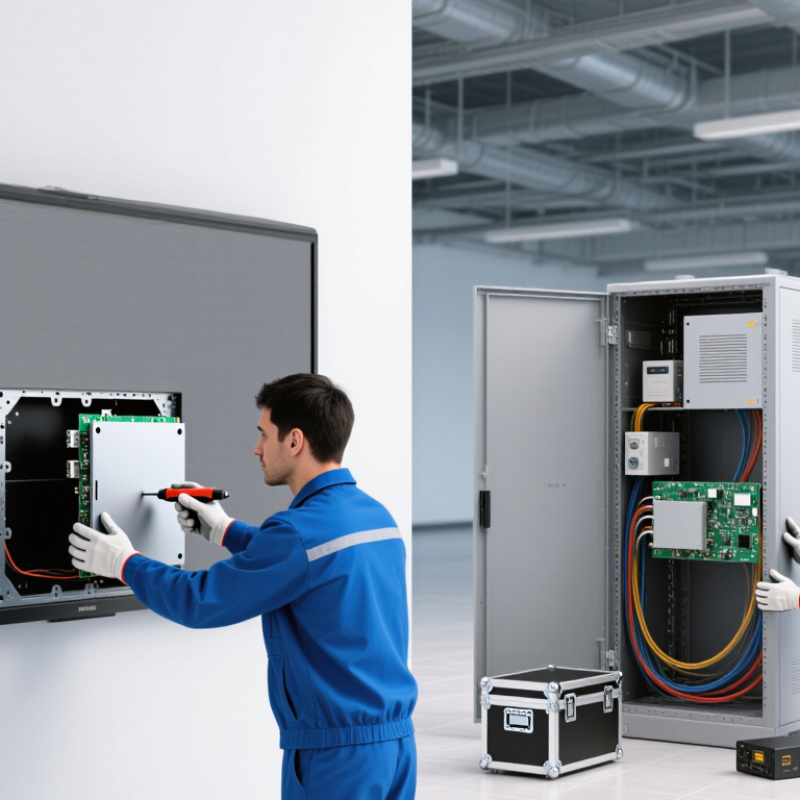
What Is the Difference Between Front and Rear Service LED?

What Front-Service and Rear-Service LED Displays Mean

Front-service and rear-service LED displays describe how technicians reach the display’s internal components. A front-service design opens from the viewing side. Technicians can remove LED modules, power supplies, or receiving cards without entering the space behind the screen. This arrangement suits wall-mounted displays, narrow corridors, and installations placed close to buildings.

Rear-service LED displays require access from the back. Their cabinets often sit on a supporting structure with a service aisle behind them. This layout gives technicians more working space and may make repeated maintenance easier. In my installation experience, rear access feels less cramped when replacing several modules. However, it needs careful planning for doors, walkways, ventilation, and safe technician movement. A front-service screen can save valuable space, but its magnetic modules and front tools require accurate handling. Small alignment errors may create visible seams.

Tips: Measure the full maintenance area, not only the screen surface. Leave room for cabinet doors or front tools. Check how power cables, ventilation paths, and drainage will behave after installation. Ask the supplier for service drawings and test one cabinet before ordering a complete system. I have seen projects overlook rear clearance. That mistake becomes expensive. Also, service access alone does not guarantee reliability; module sealing, thermal design, and component quality still matter.

How Front-Service and Rear-Service LED Displays Are Designed

What Is the Difference Between Front and Rear Service LED?

How Front-Service and Rear-Service LED Displays Are Designed

Front-service LED displays are designed for locations with limited rear access. Technicians remove modules from the viewing side using front-access tools or magnetic systems. This design works well against walls, in retail spaces, and inside narrow corridors. It reduces the need for large maintenance gaps. However, repeated front access can place stress on module edges and fasteners. A shallow cabinet helps.

Rear-service LED displays open from the back of the cabinet. Their internal layout usually includes hinged doors, power supplies, signal cards, and cooling paths. This arrangement gives technicians more working space during repairs. It also supports clearer cable routing and easier component inspection. The tradeoff is practical. The installation needs enough rear clearance for doors and hands.

During site planning, service direction should guide the cabinet structure, not follow it. A front-service cabinet may appear more flexible, but access tools still need room to operate. Rear-service systems may offer cleaner maintenance, yet a blocked service corridor can make them frustrating. I would check wall depth, ventilation, lifting space, and replacement routes before choosing. Small oversights become expensive. Specifications also cannot show every real-world obstacle, such as a nearby pipe or uneven floor.

Key Differences in Installation and Maintenance Access

Front-service and rear-service LED displays differ most in how technicians reach failed modules. Front-service models open from the viewing side. Technicians can remove a cabinet module without entering the display’s rear area. This suits wall-mounted installations, retail columns, and narrow corridors. A front-access tool, spare module, and stable platform may be enough.

Rear-service LED displays require access behind the cabinet. That space supports safer cable routing, deeper inspection, and easier power-supply replacement. However, the installation needs a service corridor, hinged frame, or removable rear panel. The U.S. Department of Energy’s Energy Savings Forecast of Solid-State Lighting estimated LED adoption could reach about 86% of installed general illumination stock by 2035. As LED systems become more common, accessible maintenance will matter more, not less.

Access changes labor risk. With front service, a technician may work from the audience side, but dropped parts can damage the screen surface. Rear service reduces front-surface contact, yet cramped corridors can slow repairs. The AVIXA Audiovisual Industry Outlook has repeatedly identified labor availability and operating efficiency as major industry concerns. Small delays accumulate. My early planning mistake was measuring cabinet depth, but not the technician’s working space. Leave room for hands, tools, airflow, and safe movement. Service drawings should show real clearance, not only product dimensions. A perfect layout on paper can still fail in the field.

Front-Service vs. Rear-Service LED Displays

Typical installation and maintenance access comparison

Front-service LED displays are generally faster to access when the rear of the screen is blocked by a wall or structure. Rear-service designs can provide efficient maintenance in open spaces, but they usually require additional clearance and more time to reach internal modules and power components.

Where Front-Service and Rear-Service LED Displays Are Used

What Is the Difference Between Front and Rear Service LED?

Where Front-Service and Rear-Service LED Displays Are Used

Front-service LED displays are designed for locations with little or no access behind the screen. Technicians remove modules from the viewing side using service tools. This design suits indoor retail walls, airport corridors, control rooms, and narrow advertising spaces. A display may sit only a few centimeters from a solid wall. That detail can decide the entire maintenance plan.

Rear-service LED displays need working space behind the cabinet. They are common on stadium facades, outdoor billboards, building exteriors, and large stage structures. Technicians open the rear door to inspect cables, power supplies, and receiving components. Rear access usually makes repeated maintenance more comfortable. It can also support deeper cabinets and stronger weather protection.

During site planning, I check more than image quality. I measure wall clearance, lifting routes, drainage, ventilation, and technician access. Front service saves space, but small modules can feel slower to handle during repairs. Rear service is practical, yet a blocked service corridor creates a serious problem. This is often overlooked. Outdoor installations also need sealed connections and suitable thermal management, not just a weather-resistant cabinet. In crowded venues, front access may protect maintenance work from public traffic. In a service yard, rear access may reduce disruption and improve inspection accuracy. The correct choice depends on the structure, not only the screen size.

How to Choose Between Front and Rear Service LED Displays

What Is the Difference Between Front and Rear Service LED?
How to Choose Between Front and Rear Service LED Displays

Front-service LED displays allow technicians to remove modules from the viewing side. They suit walls with limited rear access, retail interiors, and outdoor structures placed close to buildings. Maintenance teams can replace a damaged module without moving the entire cabinet. Access matters. However, front-service systems may require specialized magnetic tools and careful handling around the display surface.

Rear-service LED displays need working space behind the cabinet. They are often practical for stadiums, control rooms, and freestanding outdoor structures. Technicians can inspect power supplies, cables, and receiving cards more comfortably. Rear access may also simplify repeated repairs. Yet the installation needs a service corridor, which increases structural depth and space requirements. A narrow room can make this choice painful.

Industry data supports careful planning. AVIXA’s 2024 Industry Outlook and Trends Analysis projected professional audiovisual revenue at about 339.7 billion dollars in 2024. Grand View Research estimated the global digital signage market at roughly 27 billion dollars in 2023, with continued growth expected through 2030. These figures suggest more displays will operate in busy, high-visibility environments. Reliability deserves attention. Choose front service when access is restricted and uptime is critical. Choose rear service when technicians have safe clearance and frequent internal access is expected. Compare labor, cabinet depth, weather protection, pixel pitch, and replacement time. A cheaper cabinet can become expensive after installation. That choice can fail. Measure twice.

FAQS

What does front-service access mean for an LED display?

Technicians reach internal parts from the viewing side. They can remove modules, power supplies, or control cards without entering the rear space. It suits wall-mounted screens and narrow corridors.

What does rear-service access mean?

Technicians open the cabinet from behind. They need a service aisle, hinged frame, or removable rear panel. This space helps with cable checks and repeated repairs.

When is front-service access a practical choice?

Choose it when the display sits close to a solid wall. It works well in retail walls, corridors, columns, and control rooms. A few centimeters can change the entire plan.

When is rear-service access more suitable?

Rear service suits outdoor structures, large stages, and building exteriors. Technicians usually have more room to replace parts. The repair feels less cramped.

Does front service always make maintenance faster?

No. Front access saves space, but small modules need careful handling. A dropped tool may touch the display surface. Speed is not guaranteed.

What clearance should a project include?

Measure the full maintenance area, not only screen depth. Leave space for hands, tools, airflow, cables, and safe movement. Also check doors, drainage, and lifting routes.

What common planning mistake should installers avoid?

Do not measure only the cabinet dimensions. I once overlooked technician working space. The layout looked correct, but repairs became awkward and expensive.

Does service access guarantee reliable performance?

No. Reliability also depends on sealing, thermal design, and component quality. Check ventilation and weather protection carefully. Access alone is not enough.

What should be checked before ordering a complete system?

Request detailed service drawings from the supplier. Test one cabinet under real site conditions first. A small trial may reveal alignment or clearance problems.

Conclusion

What is the difference between front and rear service LED? The main distinction is how the display is accessed for installation, inspection, and repairs. Front-service LED displays are designed with access from the viewing side, allowing technicians to remove modules or reach internal components without entering the space behind the screen. This makes them suitable for installations against walls, in narrow spaces, or in locations where rear access is difficult. Rear-service LED displays, by contrast, are maintained from the back, often providing more room for larger components, ventilation, and structural support.

The choice between the two depends on the installation environment, available maintenance space, and long-term service requirements. Front-service models can simplify maintenance in compact indoor areas, while rear-service designs are often practical for outdoor structures, stage systems, and installations with accessible rear walkways. Considering access, cabinet depth, maintenance frequency, durability, and total installation conditions will help determine the most suitable LED display solution.

Liam

Liam

Liam is a dedicated marketing professional with a profound expertise in the industry, where he excels at highlighting the unique advantages of our core products. With a keen understanding of market trends and consumer needs, Liam frequently updates our company’s professional blog, providing......