As indoor LED screens become increasingly popular, a pertinent question arises: "How long do indoor LED screens usually last?" According to industry expert John Marshall, a leading researcher in display technologies, “The lifespan of an LED screen can vary significantly based on usage and environment.” His insight reflects the complexities surrounding screen longevity.
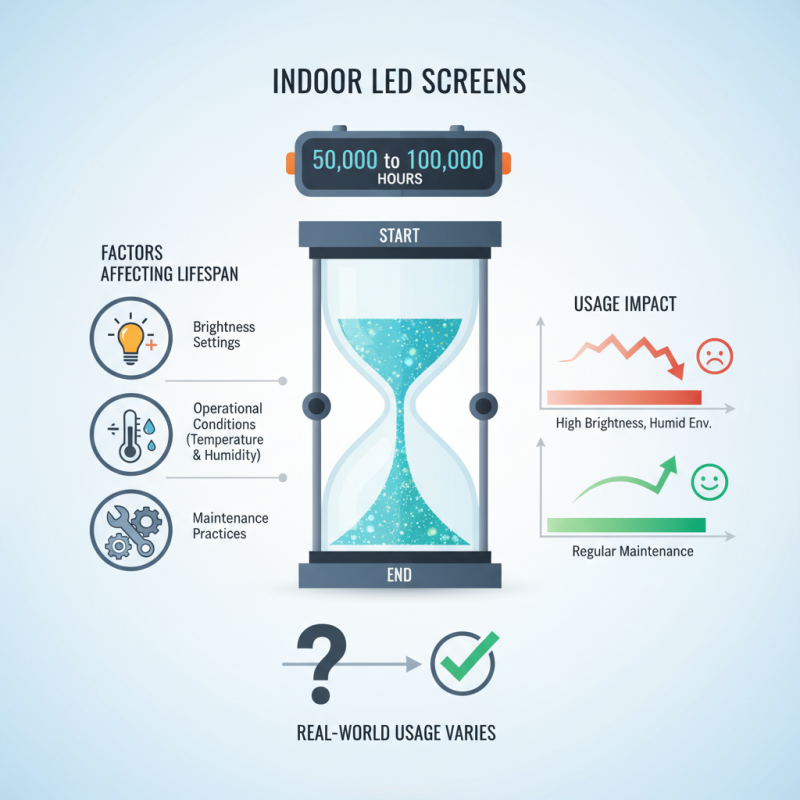
Typically, indoor LED screens can last anywhere between 50,000 to 100,000 hours. Factors such as brightness settings, operational conditions, and maintenance practices play crucial roles in determining their lifespan. Users often overlook these variables, leading to misunderstandings about screen durability.
An indoor screen operated at high brightness in a humid environment may degrade faster than expected. Regular maintenance can mitigate these risks, ensuring better performance over time. While manufacturers provide estimated lifespans, real-world usage often reveals a more nuanced picture. Understanding these details brings clarity to the question: how long do indoor LED screens really last?
Factors Influencing the Lifespan of Indoor LED Screens
The lifespan of indoor LED screens is shaped by several key factors. One significant aspect is operating conditions. Excessive heat or humidity can rapidly decrease screen longevity. For instance, a screen in a poorly ventilated space is more prone to damage. Regular temperature checks and humidity control can prolong its life.
Moreover, usage patterns heavily influence durability. Continuous operation without breaks can wear down components quicker. Some screens are designed for constant display, while others benefit from downtime. This strategy can also help in reducing overall energy consumption, balancing performance and lifespan.
Maintenance plays an essential role as well. Dust and debris can accumulate and obstruct proper functioning. Scheduled cleanings can prevent buildup and ensure optimal performance. Yet, many overlook this aspect. Comprehensive care is necessary for long-term satisfaction and reliability. These considerations guide both consumers and industry professionals in making informed decisions about LED screens.
Factors Influencing the Lifespan of Indoor LED Screens
This chart illustrates the various factors that influence the lifespan of indoor LED screens, represented as percentages indicating their impact on overall lifespan. The quality of components and maintenance frequency are critical, while environmental conditions also play a significant role.
Typical Lifespan of Indoor LED Screens Compared to Other Display Types
When considering indoor LED screens, their lifespan varies significantly compared to traditional display types.
Typically, indoor LED screens can last anywhere from 50,000 to 100,000 hours.
This longevity surpasses that of LCD or plasma displays, which often range from 30,000 to 60,000 hours.
The extended life of LEDs results from their solid-state technology, which tends to be more durable and resistant to wear.
Tips: To maximize the lifespan of your LED screen, maintain optimal operating temperatures.
Avoid extreme heat or cold, which can damage internal components.
Regularly cleaning the screen also reduces dust buildup and enhances image quality.
Another aspect to consider is how usage affects lifespan.
Constant brightness and high usage hours can lead to quicker degradation.
Balancing brightness and using the screen selectively can prolong its life.
Tips: Investing in quality control systems can help monitor performance and identify issues early.
This proactive approach can save costs in the long run.
It’s essential to weigh the initial investment against potential maintenance and replacement costs.
Maintenance Tips to Extend the Life of Your LED Screens
Indoor LED screens are a significant investment. However, their lifespan is greatly influenced by proper maintenance. According to industry reports, the average lifespan of LED screens can range from 50,000 to 100,000 hours. This depends largely on usage and care.
Routine maintenance is crucial. Regular cleaning of the screen surface can prevent dust buildup, which can affect brightness and clarity. Moreover, monitoring operating temperatures is essential. Extreme heat can shorten the lifespan. Ideally, the ambient temperature should stay between 20°C and 25°C. If not managed, overheating can reduce the screen's longevity.
Updating the software frequently is another often-overlooked factor. Outdated software can lead to performance issues. Regularly check for updates to ensure optimal functionality. Lastly, even small power surges can impact LED performance. Utilizing surge protectors can safeguard against electrical issues. Each of these maintenance steps may seem minor but can significantly enhance the overall lifespan of your LED screens.
Common Issues that Shorten Indoor LED Screen Lifespan
Indoor LED screens are valuable tools for
presentations, advertising, and entertainment. However, they can suffer from several common issues
that shorten their lifespan. Understanding these issues can help ensure optimal performance
over time.
One major issue is
overheating. Poor ventilation can cause screens to heat up.
Excessive heat not only affects performance but can also damage internal components. Regular
maintenance, including cleaning dust and ensuring proper airflow, is vital.
Another concern is
humidity. High moisture levels can lead
to corrosion and other malfunctions. It’s crucial to monitor the environment where the screen
is installed.
Frequent on-off cycles can also impact longevity.
Constantly powering the screen can strain
its components. Experts suggest allowing sufficient time for screens to cool down before turning
them back on. Additionally, using the correct calibration settings will help in managing energy
consumption and prolonging the screen’s life. Even minor adjustments can have significant
long-term benefits. Recognizing these pitfalls can lead to better care and increased reliability
in LED screens.
Signs Your Indoor LED Screen Needs Replacement or Repair
When assessing the health of your indoor LED screen, several signs indicate it might need replacement or repair.
Fading colors or inconsistent brightness often reflect underlying issues. These problems may stem from aging components or ineffective power supply.
If the screen displays flickering images, this can signal a serious malfunction. It’s essential to address these issues promptly to avoid further damage.
Another crucial indicator is the appearance of dead pixels.
These spots disrupt the screen's visuals and can be bothersome. Regular maintenance and inspection can help identify these issues early.
Additionally, if you notice distortion in the images or text, it’s time for a closer look. Such distortions usually indicate that the screen's display driver is failing.
Lastly, consider the age of the screen. Most indoor LED screens have a lifespan of around 50,000 hours.
If your screen is approaching this mark, it may be wise to begin planning for a replacement. Regular checks can foster a proactive approach, saving you from unexpected failures.
Pay attention to these signs, as they are critical for maintaining a high-quality display.
FAQS
: Overheating is a major issue. Poor ventilation can cause excessive heat, damaging components.
Regular maintenance is key. Clean dust and ensure proper airflow to maintain optimal performance.
High humidity levels can lead to corrosion and malfunction. Monitor the installation environment closely.
They can strain components. Allow the screen to cool down before powering it back on.
Fading colors and flickering images are key indicators of potential issues needing attention.
Dead pixels disrupt visuals and can indicate underlying problems with the display.
If the screen is approaching 50,000 hours of use, planning for a replacement is wise.
Correct calibration manages energy consumption and can prolong the lifespan of the screen.
If images and text appear distorted, it usually indicates a failing display driver.
Regular checks can identify issues early, fostering a proactive approach to screen care.
Conclusion
Indoor LED screens are a popular choice for various environments, but a common question is, "How long do indoor LED screens usually last?" The lifespan of these screens can be influenced by several factors, including usage patterns, environment, and maintenance practices. Typically, indoor LED screens can last anywhere from 50,000 to 100,000 hours, which is longer than many other display types, such as LCD screens.
To maximize their longevity, regular maintenance is crucial. This includes keeping screens clean and ensuring proper ventilation to prevent overheating. Users should also be aware of common issues, like pixel failure or color distortion, that may lead to a shortened lifespan. Recognizing signs that an indoor LED screen may need repair or replacement is essential for maintaining optimal performance and prolonging usability.

 Sync LED