7 Best Reasons Why Fine Pitch LED Displays Are So Expensive?

Time:2026-10-09 Author:Ethan
0%

Fine pitch LED displays create exceptionally detailed images, but their premium pricing often surprises buyers. Why are fine pitch LED displays so expensive? The answer involves more than the number of pixels packed into each cabinet. It includes precision manufacturing, advanced components, complex calibration, and demanding installation requirements.

In real projects, a fine pitch display may use thousands of tiny LED packages across a single square meter. Each package must maintain consistent brightness, color, and viewing performance. A small manufacturing variation can become visible on a large video wall. High-quality receiving cards, power supplies, driver ICs, and protective materials also increase the cost. Engineering teams must test these parts carefully before shipment.

Installation adds another layer. Fine pitch cabinets require accurate alignment, stable structures, careful cabling, and professional calibration. Even a narrow gap can disturb an otherwise seamless image. Experienced technicians may spend hours adjusting gray levels and color uniformity under different lighting conditions. That labor is easy to overlook.

The seven reasons behind the price are practical, not mysterious. Yet pricing is not always perfectly transparent. Some suppliers charge more because of stronger warranties and better service, while others may simply add a large margin. Buyers should compare pixel pitch, component quality, calibration records, lifespan, maintenance access, and support terms. The cheapest quotation can become expensive after repairs, downtime, or uneven image performance. Fine pitch LED technology is powerful, but it is not automatically the best choice for every room. Careful evaluation matters.
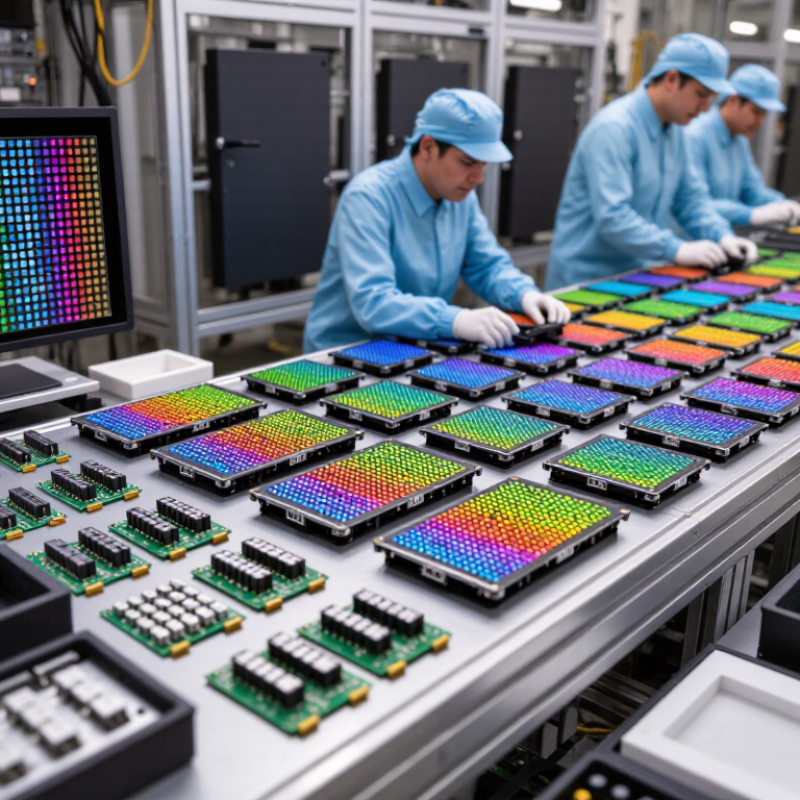
7 Best Reasons Why Fine Pitch LED Displays Are So Expensive?

What Fine Pitch LED Displays Are and How They Differ from Standard LED Screens

Fine pitch LED displays use very small gaps between individual pixels. Their pixel pitch often measures below 2.5 millimeters, while standard LED screens commonly use larger spacing. This difference creates a denser image with smoother text, cleaner skin tones, and fewer visible gaps at close viewing distances. It matters in control rooms, studios, galleries, and premium meeting spaces.

The smaller structure demands tighter manufacturing tolerances. Each LED module needs careful alignment, color calibration, and quality inspection. A tiny brightness difference can become obvious across a large wall. Fine pitch displays also require more pixels, more processing capacity, and stronger heat management in the same physical area. These technical demands explain much of the higher price. They are not merely expensive panels.

Installation adds another layer. Cabinets must connect with minimal seams, and service access should not disturb neighboring modules. In real projects, calibration time can exceed expectations. I have seen viewing-distance calculations overlooked, leaving customers paying for detail they cannot clearly see. That is a useful warning. A fine pitch display is valuable when viewers stand nearby and image quality supports the application. For distant audiences, a standard LED screen may deliver sufficient clarity at a lower cost. The right comparison should include resolution, maintenance, installation, brightness, and expected viewing distance—not pixel pitch alone.

How Pixel Pitch Affects Image Quality, Viewing Distance, and Production Costs

Pixel pitch is the distance between neighboring LED pixels, measured in millimeters. Smaller pitch packs more pixels into each square meter. This creates sharper text, smoother faces, and cleaner fine lines at close range. A 1.2 mm display can look natural in a meeting room. A 4 mm screen may show visible pixel structure there. That difference changes the viewing experience immediately.

Viewing distance matters as much as resolution. In a control room, people may stand two meters away and read small data panels. In a large hall, viewers often sit ten meters back. A larger pitch can remain convincing at that distance. Choosing an unnecessarily fine pitch raises costs without improving perceived detail. It sounds obvious, but project teams still over-specify screens. I have seen budgets increase while the audience gained almost nothing.

Production costs rise because fine-pitch modules require tighter spacing and stricter manufacturing control. Tiny alignment errors can create uneven brightness or visible seams. More pixels also mean more driver components, testing time, calibration, and replacement planning. Installation requires careful handling, since damaged areas can be difficult to match. Image quality also depends on processing, contrast, viewing angle, and content. Pixel pitch is important, not magical. A practical evaluation should include sample footage, real viewing distances, ambient light, and maintenance access. Sometimes the cheaper specification performs better. Sometimes it does not.

7 Best Reasons Why Fine-Pitch LED Displays Are So Expensive

How pixel pitch affects image quality, viewing distance, and production complexity

Smaller pixel pitches create sharper images at close range, but the number of pixels—and therefore LEDs, driver channels, solder joints, calibration points, and inspection requirements—increases rapidly. Pixel density is calculated as (1000 ÷ pixel pitch in millimeters)². The viewing-distance line uses the common engineering rule of thumb that the minimum practical viewing distance in meters is approximately equal to the pixel pitch in millimeters. Actual results vary with content, brightness, viewing angle, and installation conditions.

Why Advanced LED Components and Precise Manufacturing Increase Prices

Fine pitch LED displays cost more because their advanced components demand tighter engineering. Smaller pixel spacing requires miniature LEDs, refined driver ICs, and denser circuit boards. Each component must maintain consistent brightness, color, and thermal behavior across the entire screen.

Manufacturers also use precise production methods. Automated placement machines position tiny components with microscopic accuracy. Optical inspection checks solder joints, pixel alignment, and surface defects. A single weak connection can create a visible dark point. Technicians may test panels repeatedly before shipment, including brightness calibration and heat performance. This labor adds cost, but it reduces failures during installation and operation.

In real projects, the cabinet structure matters too. Fine pitch panels need stable frames and carefully controlled flatness. Even slight gaps can disturb images viewed from a short distance. Engineers often adjust calibration data panel by panel. That process is not glamorous. It is slow and sometimes imperfect.

There is also a practical compromise. Higher precision does not guarantee flawless performance in every environment. Dust, heat, poor ventilation, or careless handling can still shorten service life. Buyers should examine component quality, testing records, maintenance access, and warranty terms. A lower purchase price may hide higher calibration, repair, or replacement costs later. Fine detail needs disciplined manufacturing. That discipline is expensive.

How Installation, Calibration, and Maintenance Add to the Total Investment

Fine-pitch LED displays are expensive because the panels are only one part of the investment. Installation demands precise structural planning, reinforced mounting, power distribution, signal routing, and safe access for future service. A one-millimeter alignment error can create visible seams across a large wall. According to AVIXA’s 2024 Industry Outlook and Trends Analysis, professional AV projects include design, integration, installation, and support services, not hardware alone.

Calibration adds another layer. Technicians must balance brightness, color temperature, grayscale, and module uniformity across thousands of pixels. Fine-pitch screens reveal small differences quickly, especially in dark control rooms or close-viewing environments. The U.S. Department of Energy’s Solid-State Lighting R&D report references LED lifetimes near 50,000 hours, but this does not guarantee identical performance from every display module. Heat, voltage variation, dust, and operating schedules still matter.

Maintenance is often underestimated. A service team may need front-access tools, spare modules, calibration files, and documented inspection routines. The Digital Signage Federation’s industry guidance emphasizes preventive maintenance because failures affect both image quality and system uptime. However, estimates can still be imperfect. A clean showroom cannot predict restricted access, nighttime labor, or future replacement costs. Even a small color shift may require repeated calibration rather than one quick adjustment. That is where the total investment grows quietly.

When Fine Pitch LED Displays Provide Better Long-Term Value Than Alternatives

Fine pitch LED displays are expensive because they combine dense pixel placement, precise calibration, advanced processing, and demanding installation work. Their tiny LEDs create smooth images at close viewing distances. This matters in meeting rooms, control centers, broadcast spaces, and premium retail environments. A stable image can remain clear for years without projector lamps, frequent screen replacement, or visible panel borders.

The higher purchase price can provide better long-term value when uptime, brightness, and maintenance matter. LED walls can operate in bright rooms without washed-out images. They also support large, seamless canvases that LCD alternatives cannot always match. However, the calculation is not always flattering. A cheaper wall may look sensible on day one. Energy use, replacement parts, calibration, and downtime can change the result later. Real value depends on viewing distance, operating hours, content type, and service quality.

Tips: Compare total ownership costs, not only the quotation. Request brightness data, pixel-failure policies, service response times, and spare-part plans. Test real content before approval, including fine text and dark scenes. Leave access space for maintenance. A display that is slightly oversized may be wasteful. One that is too small can force an expensive replacement. Careful planning makes the premium easier to justify.

7 Best Reasons Why Fine Pitch LED Displays Are So Expensive? - When Fine Pitch LED Displays Provide Better Long-Term Value Than Alternatives

No. Main Cost Driver Typical Technical Data Why the Price Is Higher When It Can Provide Better Long-Term Value
1 Much Higher Pixel Density A 0.9 mm display contains approximately 1,234,568 pixels per square metre, compared with about 160,000 pixels per square metre for a 2.5 mm display. More pixels require more LED packages, driver circuits, circuit-board area, assembly time and quality-control steps in the same physical space. It can deliver sharper text, graphics and close-up video in meeting rooms, control rooms, studios and premium retail environments where viewers sit near the screen.
2 Tighter LED Binning and Calibration Fine-pitch products commonly use pixel-level or module-level calibration to control brightness and colour differences that are more visible at short viewing distances. Tighter optical and electrical tolerances increase component selection, calibration time, inspection requirements and replacement costs during production. Better uniformity reduces visible patchiness, improves image consistency and can lower the need for frequent visual adjustment or module replacement.
3 Advanced Driving and Processing Electronics Fine-pitch systems often support high refresh rates of approximately 3,840 Hz or higher, grayscale control, HDR workflows and low-latency image processing. Higher-performance driver ICs, receiving cards, processors and signal-management hardware add to both equipment and engineering costs. High refresh performance helps reduce scan lines and flicker in camera footage, making the display more suitable for broadcast, live production and recorded content.
4 Precision Mechanical Construction Fine-pitch cabinets require tight module alignment and controlled flatness because a small physical offset can become visible as a line or seam at close range. Precision cabinets, magnetic or front-service modules, fine adjustment features and stronger structural tolerances increase manufacturing complexity. Accurate assembly reduces alignment defects, simplifies servicing and helps maintain a seamless appearance throughout repeated installation or maintenance cycles.
5 Lower Manufacturing Yield at Smaller Pitches As pixel pitch decreases, the number of solder joints, LED packages and potential failure points per square metre increases substantially. Smaller components require more precise placement, testing and rework. Additional quality assurance is needed to maintain stable performance across the entire screen. Stronger factory testing can reduce early failures, image defects and unexpected downtime, which is valuable for displays operating for long daily hours.
6 More Specialized Installation and Commissioning Installation may require structural assessment, precise cabinet levelling, colour calibration, signal testing, power distribution checks and content-system configuration. Professional installation time and commissioning equipment add to the initial project cost, especially for large, curved or front-service installations. Correct commissioning improves image uniformity and reliability while reducing the risk of uneven seams, overloaded circuits, repeat visits and premature component failure.
7 Long Service Life and Flexible Maintenance Quality LED emitters are commonly rated for up to approximately 100,000 operating hours to a specified brightness level, although actual life depends on temperature, drive current and usage. Durable components, thermal management, redundant design options and replaceable modules increase the initial investment compared with simpler display solutions. Individual modules or components can often be serviced instead of replacing the entire display. This may reduce lifecycle disruption and improve total cost of ownership for continuous-use applications.
Planning note: Pixel-density figures are calculated as (1,000 ÷ pixel pitch in millimetres)². Actual price, power consumption, service life and maintenance cost vary according to brightness, cabinet size, refresh rate, operating environment, installation conditions and usage hours. Fine-pitch LED is generally most economical when close-view image quality, seamless scaling, long operating hours or modular serviceability are important requirements.

FAQS

What is pixel pitch?

Pixel pitch is the distance between neighboring pixels, measured in millimeters. Smaller spacing creates more pixels per square meter. Simple, but easy to overlook.

How does smaller pixel pitch improve image quality?

It makes text sharper, faces smoother, and fine lines cleaner at close range. A 1.2 mm display may look natural in a meeting room.

Why does viewing distance matter?

Viewers farther away notice fewer pixel details. A 4 mm screen may look acceptable from ten meters, but distracting from two meters.

Can choosing a finer pitch waste money?

Yes. An unnecessarily fine pitch can raise costs without improving visible detail. The budget grows, while the audience gains almost nothing.

Why do fine-pitch displays cost more to produce?

Dense pixels require tighter spacing, careful alignment, more testing, and detailed calibration. Tiny errors may cause uneven brightness or visible seams.

What factors affect image quality besides pixel pitch?

Processing, contrast, viewing angle, ambient light, and content also matter. Pixel pitch helps, but it is not magic.

When can a fine-pitch display offer better long-term value?

It may help when close viewing, high brightness, long operating hours, and reliable uptime matter. The higher purchase price can sometimes reduce future disruption.

What costs should buyers compare?

Compare energy use, calibration, replacement parts, downtime, installation, and service response. The quotation alone is incomplete.

How should a display be tested before approval?

Test real footage at the actual viewing distance. Include small text, dark scenes, bright rooms, and skin tones. Samples can still mislead.

What maintenance details should be planned?

Leave access space behind or around the display. Ask about failed-pixel policies, spare parts, and matching damaged modules. We sometimes plan too late.

Conclusion

Fine pitch LED displays deliver exceptionally sharp images by placing pixels much closer together than standard LED screens. This tighter pixel pitch improves clarity at short viewing distances, making the displays suitable for control rooms, retail spaces, studios, conference venues, and other environments where detail matters. However, why are fine pitch LED displays so expensive? The answer begins with their advanced components, including smaller LEDs, more precise circuit boards, and highly accurate assembly processes. Producing a seamless, uniform display requires strict quality control and careful testing, which increases manufacturing costs.

The total investment also includes more than the display itself. Professional installation, structural planning, signal configuration, calibration, and ongoing maintenance all contribute to the final price. Although the initial cost may exceed that of traditional screens or other display technologies, fine pitch LED displays can offer better long-term value through durability, scalability, high brightness, and consistent image performance. When visual quality, reliability, and flexible screen size are essential, their higher upfront cost may be justified by stronger performance and a longer service life.

Ethan

Ethan

Ethan is a seasoned marketing professional with a deep expertise in our company's innovative product line. With a passion for sharing knowledge and insights, he takes the lead in regularly updating our corporate blog, where he explores industry trends, product features, and effective marketing......