Engineered for high visibility, athlete safety, and high-contrast digital advertising in sports stadiums across Rwanda.
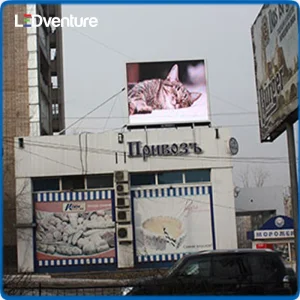
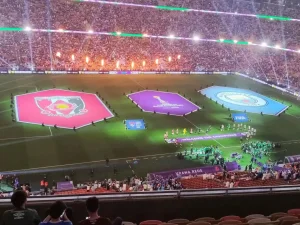
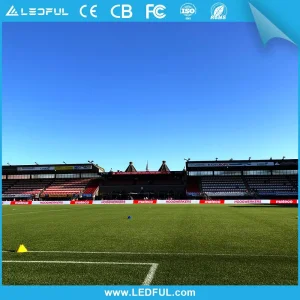
An in-depth analysis of East Africa's rising sports hub and the technical requirements for perimeter display systems.
Over the last decade, Rwanda has strategically positioned itself as a premier destination for continental and global sports tourism in East Africa. Backed by initiatives such as "Visit Rwanda" and massive public-private investments, the nation has hosted elite continental events, including the AfroBasket, the Basketball Africa League (BAL) finals at the state-of-the-art BK Arena (formerly Kigali Arena), and various FIFA-backed football tournaments. With the comprehensive upgrade of the Amahoro National Stadium to a 45,000-seater world-class venue and the construction of local sports centers across Huye, Rubavu, and Bugesera, the demand for FIFA and CAF-compliant digital hardware has expanded exponentially.
This rapid shift from traditional static billboards to dynamic digital perimeter displays is driven by the necessity to maximize advertising yield. Modern sports broadcast contracts require ultra-high-definition, high-contrast displays that project clear logos without scan lines under high-speed television cameras. Digital LED perimeters allow stadium operators and sports federations (such as FERWAFA) to scale ad rotations, target multiple language demographics via split feeds, and secure international tier-1 sponsorships.
Rwanda's equatorial highland climate features intense UV exposure, high altitude (ranging from 1,000 to over 2,000 meters above sea level), and heavy seasonal rains. Standard indoor or low-grade outdoor LEDs suffer from accelerated yellowing of the epoxy, heat dispersion failure, and moisture ingress. Our displays utilize proprietary anti-UV masks, high-efficiency silicon encapsulation, and custom thermal ventilation systems designed to perform flawlessly in high-altitude environments like Kigali and Huye.
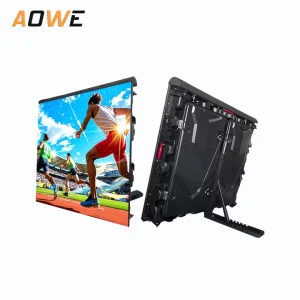
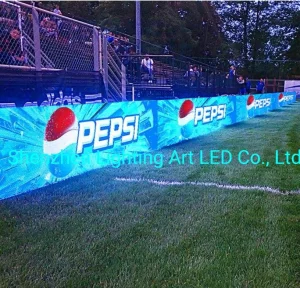
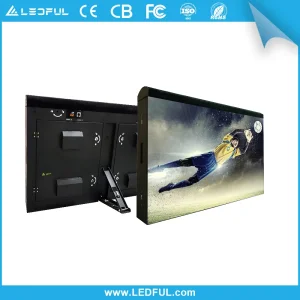
Physical impact is a constant hazard in football and basketball. Under FIFA regulations, field perimeters must prevent player injuries while maintaining display integrity. Our panels feature soft polymer top protection cushions, flexible rubber louver masks, and quick-release mechanism back supports. If a player collides with the screen, the display absorbs the mechanical energy to mitigate injury, and the screen modules are designed with independent hot-swappable hardware nodes for zero-downtime maintenance.
The progression of stadium screen technologies, driving energy efficiency and hyper-real broadcast synchronization.
Traditional common anode architecture routes voltage blindly to all sub-pixels, wasting energy as heat. Our Common Cathode technology supplies precise power to the Red (2.8V) and Blue/Green (3.8V) diodes independently, reducing power draw by up to 40% and extending lamp life—crucial for optimizing operational expenditures (OpEx) on municipal power budgets in East Africa.
For broadcast matches, standard screen refresh rates (1920Hz) generate flickering black lines under slow-motion camera replays. Our stadium solutions deliver >3840Hz up to 7680Hz refresh rates alongside 16-bit grayscale depth, ensuring that sponsors receive crystal-clear, flicker-free brand placement on international broadcasts (SuperSport, Canal+, RBA).
We are actively transitioning the industry towards Chip-on-Board (COB) and Micro LED technology. Unlike standard Surface Mounted Diodes (SMD) that are prone to physical impact damage on the pitch side, COB encapsulates the chip directly on the PCB board, resulting in a completely flat, waterproof, dustproof, and impact-resistant screen surface with enhanced contrast.
Optimizing visual communications, safety parameters, and commercial return on investment.
We provide stadium operators and local sports federations with comprehensive engineering designs that go beyond just LED cabinets. Our complete turnkey systems cover:
From initial structural layout design to fiber-optic signal distribution, we deliver end-to-end setups tailored to the specific mechanical and architectural realities of arenas in East Africa.
Our control software features smart multi-window segmentation, allowing stadium operators to display live game scores, timing, player stats, and rotating ad spaces simultaneously. Fully compatible with major commercial software suites, it supports instant ad swaps, live content scheduling, and real-time playback logs to provide advertisers with audited proof-of-play.
Our displays feature remote telemetry. Engineers in Rwanda or at our HQ can monitor the operating temperature, power supply health, and pixel performance of individual screens over the cloud, enabling predictive maintenance before any faults impact a live broadcast.
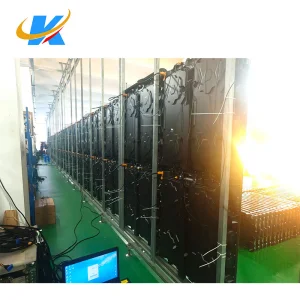
Explore the manufacturing facility of Shenzhen Sync LED Co., Ltd. and our full-cycle QA processes.
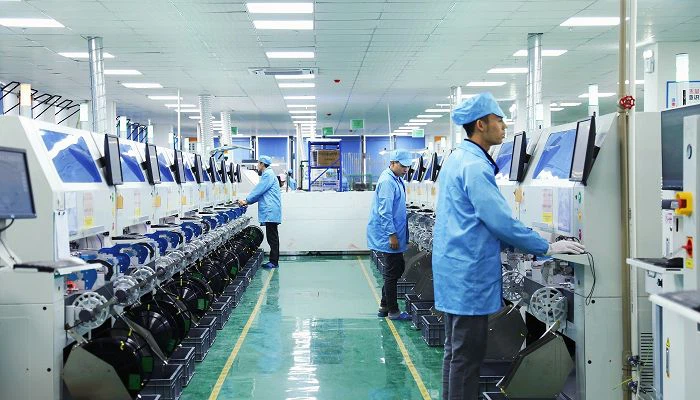
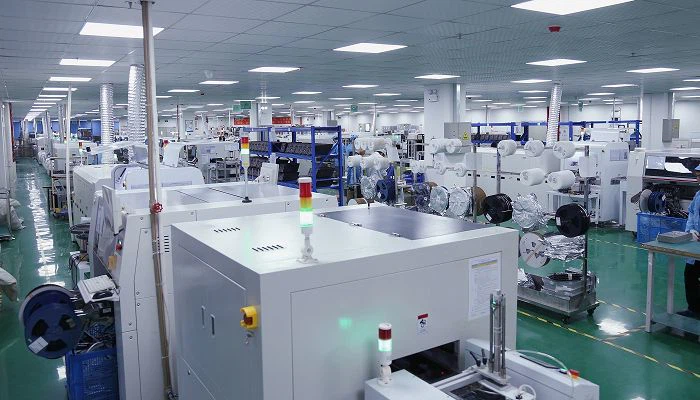
Shenzhen Sync LED Co., Ltd. (founded in 2003) has established itself as an industry leader, advancing from initial assembly lines in Xiamen to our state-of-the-art Shenzhen Smart Factory 4.0 facility. Spanning tens of thousands of square meters, our facility handles major display engineering projects worldwide.
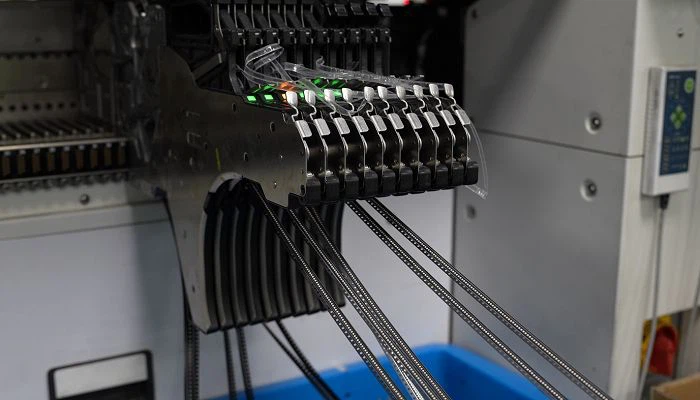
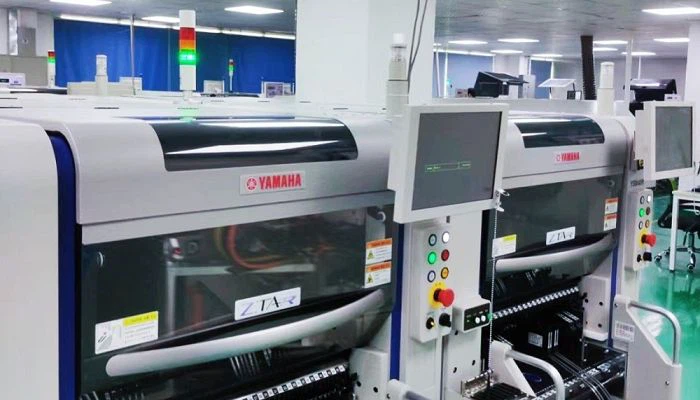
With an automated monthly production capacity exceeding 30,000 square meters and an agile supply chain structure, we offer lead times as short as 1 to 10 working days for standard modules. Our factory incorporates automated high-speed SMT placement lines, 12-zone reflow soldering systems, and automated optical inspection (AOI) units, ensuring that every LED module delivers consistent color uniformity and reliability.
We source raw components from trusted names (Nationstar or Kinglight LEDs, Macroblock ICs, and MeanWell power supplies) to ensure long-term stability. By combining these premium components with our automated production systems, we consistently deliver visual hardware that stands up to the demands of daily stadium operation.
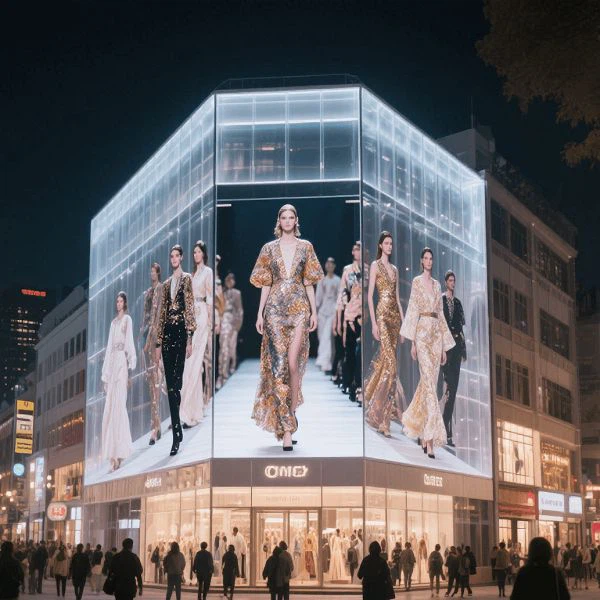
Every perimeter cabinet undergoes a comprehensive testing procedure to ensure structural and operational reliability in tough field conditions.
Automated Optical Inspection scans SMT soldering points for microscopic bridges or dry joins before panel assembly.
Testing from -30°C to 60°C to simulate extreme outdoor conditions and prevent thermal stress failure.
Spectroradiometer alignment and precise Gamma Correction ensure uniform colors and smooth gradients.
Every display undergoes a continuous 72-hour burn-in run at maximum brightness to identify early-stage component defects.
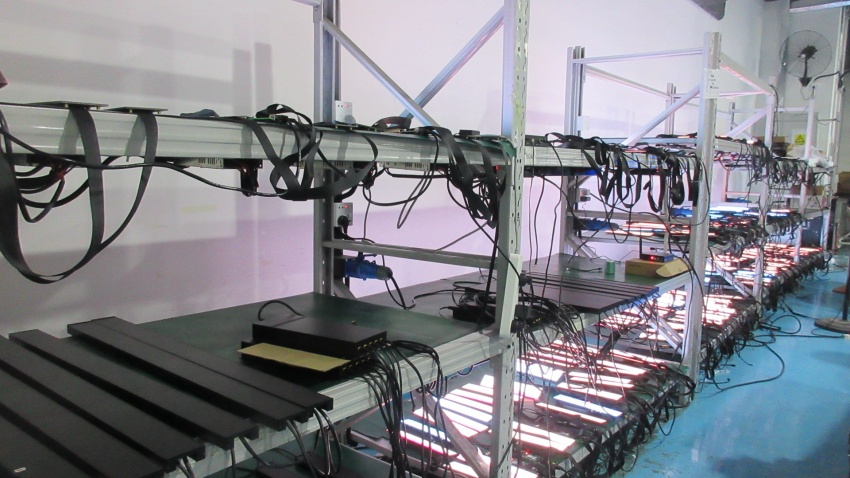
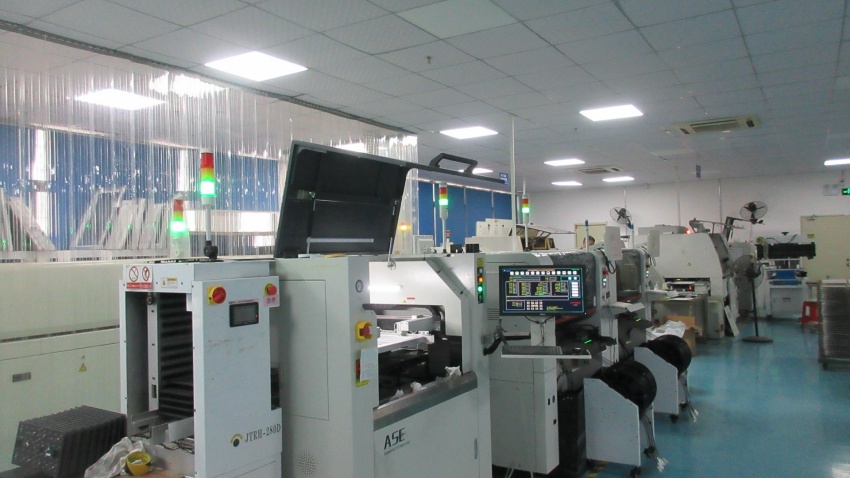
Providing end-to-end import compliance, CE/FCC/RoHS certifications, and local technical assistance.
Navigating shipping logistics into landlocked East African locations requires experienced supply chain management. We manage transport routing through the port of Mombasa (Kenya) or Dar es Salaam (Tanzania) via the Northern/Central Corridor straight to Kigali. For time-critical stadium projects, we coordinate direct air freight to Kigali International Airport (KGL).
We handle all necessary customs documentation, Certificate of Conformity (CoC) requirements, and coordinate inspections through global agencies like SGS or Intertek to ensure compliance with Rwanda Standards Board (RSB) regulations, ensuring a smooth customs clearance process.
Our LED hardware carries full CE, FCC, RoHS, and UL electrical certifications, ensuring it meets strict emissions, environmental safety, and power regulation standards.
We provide full commissioning support. For major arena installations in Kigali, Huye, or Gisenyi, we send certified technicians to oversee steel framework mounting, set up fiber networks, configure the software, and train local stadium staff on operation and maintenance.
Technical insights and buying considerations for stadium perimeter LED installations in East Africa.
For large soccer stadiums, P8 (8mm) and P10 (10mm) are the industry standards under FIFA guidelines. They offer a great balance between viewing distance and budget, delivering sharp visuals for the stands and broadcast cameras. For smaller indoor arenas or close-up multi-sport courts (like basketball or volleyball courts at BK Arena), smaller pitches like P4, P5, or P6 are recommended to ensure clean resolution for spectators near the court.
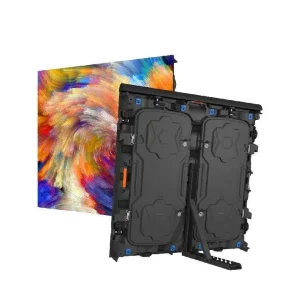
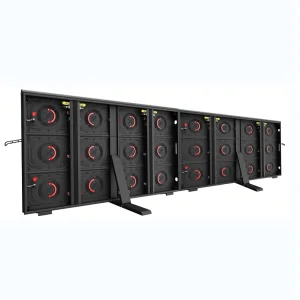
Our sports displays feature soft, impact-absorbing polymer louvers and a top protection cushion. These components protect players during collisions, and the adjustable rear supporting legs are designed to absorb force and prevent the cabinet from tipping forward onto the field.
We use high-gray-scale constant current driver ICs that deliver refresh rates of ≥3840Hz (up to 7680Hz). This ensures the display syncs perfectly with high-speed broadcast cameras, eliminating horizontal black scan lines or flickering during live transmissions.
Yes, our outdoor cabinets feature IP65/IP66 front and rear ingress protection ratings. The LED modules are sealed with moisture-resistant silicone, and the face masks are treated with UV inhibitors to prevent fading and cracking from high-altitude solar radiation.
We provide a comprehensive 3 to 5-year warranty on all structural components, LED modules, and power supplies. Our engineering team offers online support 24/7, and we can dispatch technicians to Rwanda for on-site commissioning, calibration, and hands-on operational training during stadium setup.
Explore our complete catalog of high-brightness, waterproof perimeter displays for commercial installations in Rwanda.
 Sync LED